


摘要
漓江流域地处我国南方喀斯特典型分布区,地层起源古老、喀斯特发育历史漫长。其植被类型多样且空间分异复杂,但高精度群系尺度的分布信息缺乏。该文基于众源采集植被数据、多源遥感融合技术和多尺度影像分割等新一代1∶50万中国植被图方法,识别漓江流域植被的主要群系或群系组类型,并分析其面积组成与空间分布特征。结果表明:(1)植被类型具有较高的多样性和复杂性,共识别到4个植被型组、10个植被型和23个群系(组)。(2)人工干预植被类型占流域面积超过87%,其中马尾松林、马尾松针阔混交林、杉木林和毛竹林合计占比超61%,农业植被占比约26%,而原生地带性常绿阔叶林合计不足5%。(3)群系空间分异规律明显。地带性植被分布于碎屑岩区域,非地带性植被分布于喀斯特区域;垂直方向上,呈现典型常绿阔叶林带转换为常绿与落叶阔叶混交林带的海拔梯度特征;水平方向上,四周山地以森林群系为主,中部平缓区域以灌丛群系和农业植被群系为主。该研究阐明了漓江流域植被的群系分类、面积组成和空间分布等特征与规律,为漓江流域生态系统保护和修复,以及流域的可持续发展和生态价值评估提供科学基础和依据。
Abstract
The Lijiang River basin, located in a typical karst region of southern China, has an ancient stratigraphic origin and a long history of karst development. It harbors diverse and spatially complex vegetation alliance types. However, high-resolution distribution data at the alliance level have been lacking. Based on the new generation 1∶500 000 China vegetation map compilation method, which integrates crowdsourced vegetation data, multi-source remote sensing fusion, and multi-scale image segmentation, this study identified the major vegetation alliance types (or alliance groups) in the Lijiang River basin and analyzed their area composition and spatial distribution patterns. The results were as follows: (1) The vegetation types exhibited high diversity and complexity. A total of 4 vegetation formation groups, 10 vegetation formations, and 23 alliances (groups) were identified. (2) Anthropogenically influenced vegetation types accounted for more than 87% of the basin’s area. Specifically, Pinus massoniana forest, 𝑃. massoniana mixed needleleaf and broadleaf forest, Cunninghamia lanceolata forest, and Phyllostachys edulis forest together occupied over 61% of the basin, while agricultural vegetation (food crops and orchards) covered approximately 26%. In contrast, primary zonal evergreen broadleaf forests (e.g., Castanopsis eyrei forest and C. carlesii forest) together comprised less than 5% of the total basin area. (3) Clear spatial differentiation patterns were observed among alliances. Zonal alliances were strictly confined to non-karst mountains (e.g., Yuechengling, Haiyangshan, Jiaqiaoling), whereas non-zonal alliances (e.g., Cyclobalanopsis glauca mixed evergreen and deciduous broadleaf forest, Vitex negundo + Loropetalum chinense shrubland) dominated the karst areas. Vertically, a distinct altitudinal zonation was evident, transitioning from typical evergreen broadleaf forest belt to mixed evergreen and deciduous broadleaf forest belt. Horizontally, forest alliances mainly occupied the surrounding mountainous regions, whereas shrubland and agricultural alliances prevailed in the central gentle terrain. This study reveals the classification, area composition, and spatial distribution patterns of vegetation alliances in the Lijiang River basin, providing a scientific basis and supporting evidence for the conservation and restoration of the basin’s vegetation ecosystems, as well as for sustainable development of the basin and the assessment of its ecological value.
漓江流域位于广西东北部,属珠江流域西江水系,是我国南方典型的喀斯特地貌分布区,也是桂林山水景观的核心载体,其喀斯特地貌及其科学价值举世闻名、全球独一无二(刘金荣等,2001)。独特的气候水文条件与喀斯特地貌背景相互作用,加之华南第一峰猫儿山形成的巨大海拔梯度,使得漓江流域内造就了丰富多样的植被类型。群系作为植被分类体系中的核心等级单元,是具有相同建群种或共建种的植物群落联合体(方精云等,2020),能够综合反映区域植被与环境的相互作用关系。漓江流域地处我国东部湿润森林区向西南干热河谷区的过渡地带,同时叠加喀斯特地貌的特殊生境,这使其植被的群系类型呈现高度的复杂性和独特性(苏宗明等,2014)。这些丰富多样的植被对漓江流域水源涵养、土壤保持、生物多样性维持和山水景观等功能的发挥具有至关重要的作用(朱彪等,2004;段文军等,2015)。
漓江流域植被生态系统的重要性使得其相关研究一直以来都受到高度关注。在植被类型分类及特征方面,早在20世纪60年代,广西植物研究所等单位相关研究人员就对阳朔县的植被展开调查,20世纪80年代又对流域内的猫儿山及灵川县进行了植被考察(苏宗明等,2014);20世纪末至21世纪初,研究人员对猫儿山林区、青狮潭水源林区、海洋山林区、千家洞林区进行了科学考察,初步了解了主要自然保护区的植被类型和结构特征(苏宗明等,2014)。有学者对漓江流域内的湿地植被类型及水陆交错带的植被类型分类进行了研究,发现漓江流域具有较丰富的湿地、高山湿地及水陆交错带植被类型(梁士楚等,2015;漆光超,2018;黄歆怡等,2023)。此外,研究者对流域内一些特定的植被类型如马尾松林和檵木林等类型的演替及群落特征也进行了调查分析(欧祖兰等,2005;马姜明等,2013);针对特定区域如漓江沿岸植被的植物多样性也有一些调查发现(韦毅刚,2004;Chen et al., 2022)。在宏观尺度上,有研究分析了漓江上游植被景观格局的变化特征(向悟生等,2009),但更多研究集中于漓江流域土地利用变化(王金叶等,2025)。就植被分类角度而言,这些宏观尺度研究中的植被分类级别大多仅能精确到植被型组级别(如森林、灌丛、草丛等),而缺乏对流域植被基本分类单元或低等级分类单元(如群系、群丛)类型、面积及其空间分布的研究,因此难以准确评估流域植被生态系统的演替过程及其提供的生态服务;就生态功能而言,同一植被型组内不同群系类型的生态功能可能存在巨大差异,例如铁杉林和水青冈林都为森林,但它们对降水径流的调节作用存在明显差异,不同林型水文功能存在明显差异(刘世荣等,2003;段文军等,2015)。但是,现有相关研究大多假定同一植被型组类别(如森林)的生态系统服务功能一致(王金叶等,2025),这一假定可能会导致研究结果的巨大不确定性,从而无法正确指导农林牧生产规划、土地利用规划、生态恢复及环境管理等实践活动。
植被群系类型划分与空间分布的研究是植被生态学的基础性工作,也是区域生态保护与修复实践的重要科学基础(郭柯和谢宗强,2025)。漓江流域是我国南方喀斯特地貌的典型代表和世界重要旅游地,因此准确掌握该流域植被的群系类型及空间分布信息具有重要的理论价值与现实意义。就理论层面而言,漓江流域处于多个生物地理区的交汇地带,喀斯特生境的特殊性使该区域植被具有独特的区系组成与群落结构(苏宗明等,2014),对其开展调查研究可深化对喀斯特和非喀斯特交互区植被演替规律的认识;就应用层面而言,可为漓江流域生态保护和退化植被的修复提供参照系,使其持续保持优良状态并实现可持续发展,而高精度的植被分布信息是科学指导解决这些问题的重要基础。鉴于此,本研究基于众源采集、多源遥感融合技术和多尺度影像分割等新一代1∶50万中国植被图绘制方法,获取了漓江流域大量植被地面分布点信息,同时结合多源遥感数据的精细斑块划分与专家判读,识别漓江流域主要的群系类型与空间分布特征,回答的主要问题包括:(1)漓江流域植被群系类型的组成有何特点;(2)不同植被类型的面积组成如何;(3)不同群系类型的地理分布有何特征。本研究旨在为漓江流域生态保护与修复、生物多样性保育和景观可持续管理提供科学依据。
1 研究区概况与方法
1.1 研究区概况
漓江流域的地理坐标为110°07′—110°47′E、24°38—25°53′N,地处南岭山脉南麓,属珠江流域西江水系。漓江发源于华南第一峰猫儿山(海拔2 142 m),自北向南流经兴安县、灵川县、桂林市城区、阳朔县,流域总面积约5 830 km2(王金叶等,2025)。
漓江流域地貌类型多样,总体呈现“北高南低、东西两侧高、中间低”的地势格局。流域北部为越城岭中山山地,海拔多在1 000 m至1 500 m之间,猫儿山为流域最高点;东北部为海洋山山地,海拔800~1 200 m;西部为架桥岭山地,海拔500~1 000 m;中部和南部则为典型的喀斯特地区,其中桂林—阳朔段为核心的漓江两岸喀斯特地貌被誉为“中国南方喀斯特的典型代表”,发育有峰林、峰丛、孤峰、溶洞、地下河等多种喀斯特形态,形成了“山在水里、水在山中”的独特景观格局(向悟生等,2009)。
漓江流域地处中亚热带季风气候区,气候温和湿润,雨量充沛,四季分明。流域年均气温17~20 ℃,最冷月(1月)均温5.6~8.5 ℃,最热月(7月)均温27.2~28.5 ℃,极端最低气温-5.0 ℃,极端最高气温39.5 ℃。≥10 ℃的年活动积温5 000~6 500 ℃,年均日照时间约1 550 h。流域降水丰富,但时空分布不均,年平均降水量1 814~1 941 mm,降水主要集中在3—8月,占全年降水量的70%~80%(向悟生等,2009)。
漓江流域属中亚热带常绿阔叶林地带,地带性植被为典型常绿阔叶林,但由于长期的人类活动干扰和喀斯特生境的特殊性,原生常绿阔叶林保存较少,现有植被多为次生植被和人工植被,以次生常绿阔叶林、常绿与落叶阔叶混交林、针阔混交林和灌丛等类型为主。
1.2 研究方法
1.2.1 地面样点数据采集与整理
地面样点数据是获取不同植被类型空间分布的重要基础(Cheng et al., 2023)。早期植被分布图的绘制有赖于专家在野外考察中积累的经验,并结合地形图、土壤图等专题图件手工识别并分类绘制(Su et al., 2020; 郭庆华等,2021)。由于缺乏高精度样点数据且遥感数据稀缺,因此植被分布图的精度整体不高(Su et al., 2020)。随着移动智能终端与信息技术的不断进步,众源采集逐渐成为快速获取大量地面植被样点数据的新手段(郭庆华等,2021;Cheng et al., 2023)。本研究采用“新一代中国植被图绘制”团队开发的“绿途”众源植被调查系统(金时超等,2021),在漓江流域主要自然植被覆盖区域开展样点采集。野外采集时,对面积达到500 m × 500 m以上的群系斑块进行打点记录。同时结合历史资料,构建了面向植被图绘制的地面样点数据集。经过数据过滤与标准化处理,最终筛选出5 800条用于流域植被图绘制的地面样点数据。
1.2.2 植被斑块提取与分类
早期的植被分布图件多为手动绘制而成,往往存在植被边界与实际分布不一致等问题。近年来,卫星遥感技术的快速发展为获取大范围植被信息提供了数据源。本研究基于2020年Sentinel的遥感数据,采用AGSFIM(adaptive Gaussian filter and SFIM model)方法将Sentinel-2中20 m和60 m波段的空间分辨率提高至10 m(郭庆华等,2021;胡天宇等,2023)。依据这一遥感数据,采用eCognition软件的多尺度影像分割算法,以区域生长合并的影像分割算法为基础,充分考虑了对象特征和类间关系等信息,按大、中、小3个尺度层级对影像进行分割处理形成斑块。按照1∶50万图幅要求,最小斑块的大小需500 m × 500 m以上(郭庆华等,2021)。采用众源采集的数据点信息识别斑块的植被群系类型,对于缺乏地面样点的斑块采用补充采集地面样点,以及植被专家根据地面遥感数据的影像特征进行人工判读,以提高斑块植被类型识别的准确性。
参考《广西植被》(第一卷)、《中国植被分类系统修订方案》、“中国喀斯特植被分类系统”和中国新一代植被图绘制的植被分类系统和分类原则进行植被分类系统的划定(苏宗明等,2014;郭柯等,2020;刘长成等,2021)。基本思想是高级单位偏重于群落的生态和外貌,中级和低级单位偏重于群落的种类组成和群落结构(方精云等,2020)。考虑到中国南方很多植被的优势种不明显,部分混杂分布的群系类型,以其特征种进行分类命名。此外,因为南方植被分布复杂,在植被图绘制时很难做到所有类型均以群系上图,部分类型以群系组的级别进行绘图,所以在编制植被分类系统时,对群系组的类型进行了标注。由于流域人工林分布广泛,因此图中包含面积较大的人工林类型。因遥感数据判读等原因而使图中未包含水生植被,在最终的群系图中仅以“水体”类别进行表示。本研究采用贾宁霞等(2021)提出的植被图图例方案对漓江流域植被群系分布图进行绘制。
2 结果与分析
2.1 漓江流域主要植被群系类型与分类系统
根据植被斑块提取和分类的结果,漓江流域植被共有4个植被型组、10个植被型、15个植被亚型及23个群系。其中,常绿针叶林包含2个群系,针叶与阔叶混交林、落叶阔叶林和常绿与落叶阔叶混交林均包含2个群系,常绿阔叶林有7个群系类型,竹林含1个群系,竹丛1个群系,落叶阔叶灌丛4个群系,灌草丛2个群系。
由于农业植被系人工管理的植被类型,在时间上转变较快,因此未对该植被型组下的植被类型进行细分,统一划分到植被型一级。从野外调查结果看,漓江流域分布较广的农业植被群系类型有水稻、柑橘园、百香果园和葡萄园等。
具体植被分类系统如下文所述。其中,植被型组用英文字母A、B、C等统一编号;植被型用一、二、三等中文数字后加“、”进行编号;植被亚型用(一)(二)(三)等进行编号;群系或群系组用1、2、3等数字后加“.”进行编号。人工林类型和群系组在括号中分别标注“人工林”和“群系组”。
A 森林
一、常绿针叶林
(一)暖性常绿针叶林
1.马尾松(Pinus massoniana)林(人工林)
2.杉木(Cunninghamia lanceolata)林(人工林
二、针叶与阔叶混交林
(二)亚热带山地常绿针叶与阔叶混交林
3.福建柏(Fokienia hodginsii)林
(三)暖性常绿针叶与阔叶混交林
4. 马尾松(Pinus massoniana)针阔混交林三、落叶阔叶林
(四)暖性落叶阔叶林
5.枫香树(Liquidambar formosana)林
6.茅栗(Castanea seguinii)林四、常绿与落叶阔叶混交林
(五)亚热带山地常绿与落叶阔叶混交林7.水青冈(Fagus longipetiolata)林(群系组)
(六)喀斯特常绿与落叶阔叶混交林
8.青冈(Cyclobalanopsis glauca) 常绿与落叶阔叶混交林(群系组)
五、常绿阔叶林
(七)典型常绿阔叶林
9.米槠(Castanopsis carlesii)林
10.甜槠(C. eyrei)林
11.木荷(Schima superba)林
(八)山地常绿阔叶林
12.硬壳柯(Lithocarpus hancei)林
(九)季风常绿阔叶林
13.罗浮锥(Castanopsis faberi)林
14.黧蒴锥(C. fissa)林
15.桉树(Eucalyptus spp.)林(人工林ꎬ群系组)
六、竹林(十) 暖性竹林
16.毛竹(Phyllostachys edulis)林(人工林)
B 灌丛七、竹丛(十一)温性竹丛
17.箭竹(Fargesia spathacea)竹丛八、落叶阔叶灌丛
(十二)温性落叶阔叶灌丛
18.杜鹃(Rhododendron simsii)灌丛
(十三)暖性落叶阔叶灌丛
19.黄荆(Vitex negundo)+ 檵木(Loropetalum chinense)灌丛
(十四) 喀斯特落叶阔叶灌丛
20.红背山麻杆( Alchornea trewioides)+浆果楝(Cipadessa baccifera)灌丛
21.小果蔷薇(Rosa cymosa)+雀梅藤(Sageretia thea)灌丛C 草本植被(草地)
九、灌草丛
(十五)亚热带与热带灌草丛
22.五节芒(Miscanthus floridulus)草丛
23.芒(M. sinensis)草丛
D 农业植被
十、粮食作物与果园
2.2 不同植被类型的面积组成
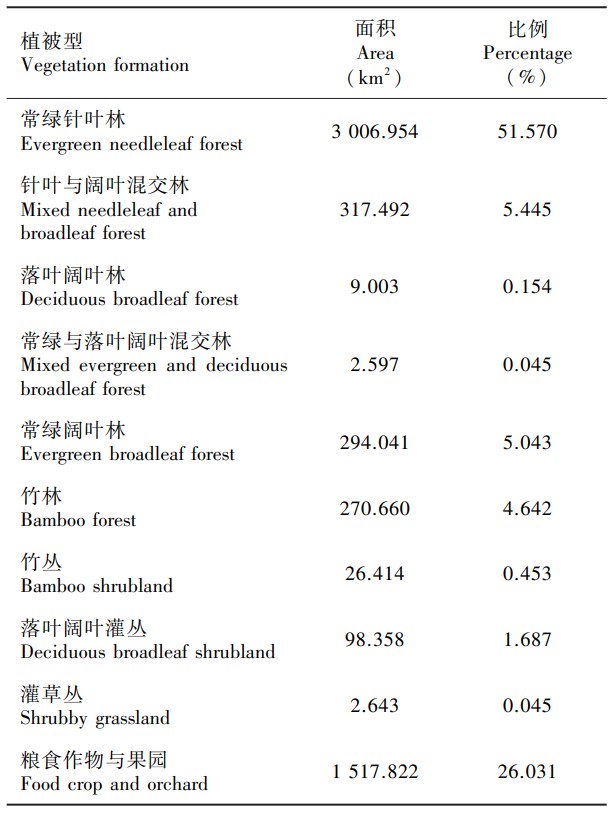
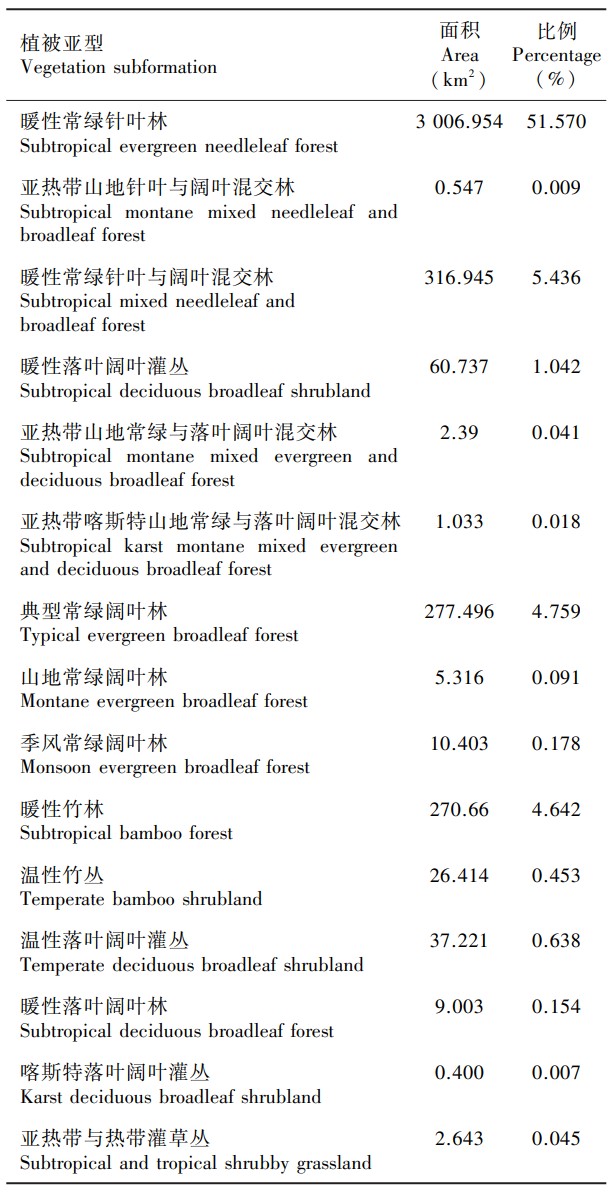
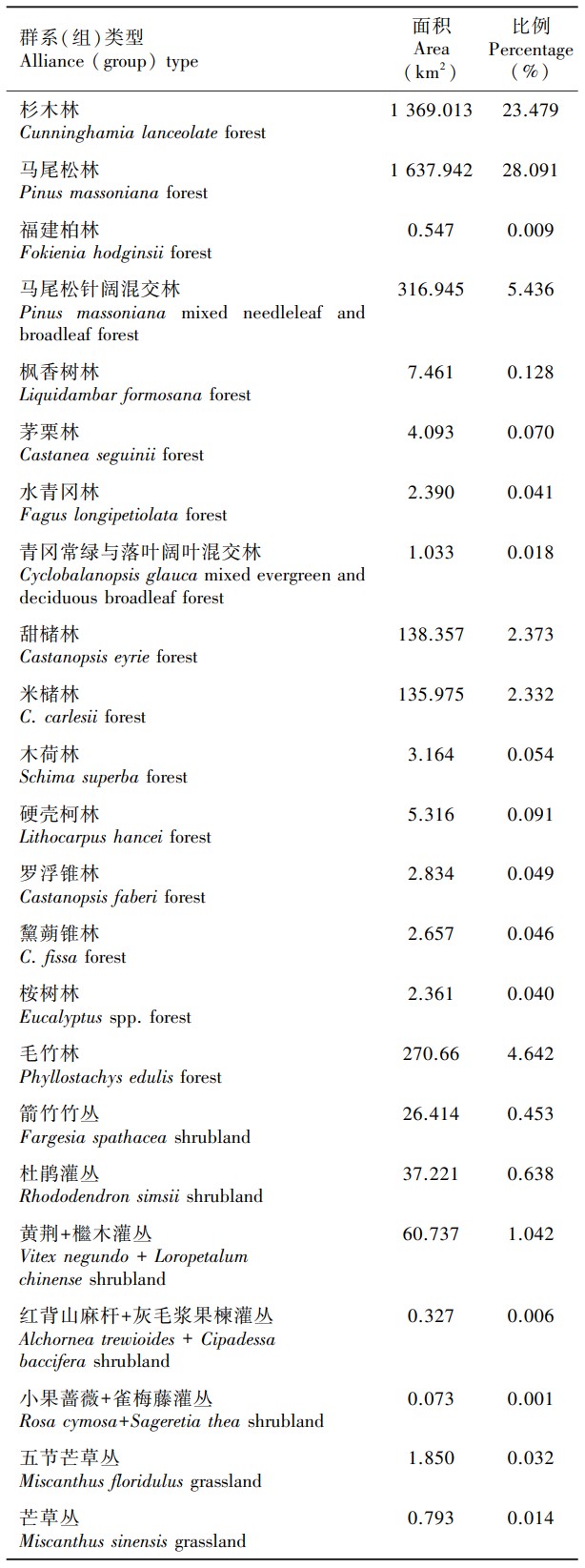
从植被型组的面积组成来看,漓江流域以森林植被占绝对优势,面积占比超过66%,其次为农业植被,灌丛和草本植被的分布面积较小(图1)。在植被型层面,常绿针叶林是流域内最大的植被型,占比过半;粮食作物与果园也占有较大比例;针阔混交林、常绿阔叶林及竹林的比例相近,各占5%左右,其余植被型面积均不足2%(表1)。植被亚型的组成规律与植被型基本一致,暖性常绿针叶林面积最大,亚热带山地针叶与阔叶混交林次之(表2)。就植被群系而言,马尾松针阔混交林分布最广,杉木林次之,马尾松林、毛竹林、甜槠林、米槠林,以及黄荆+檵木灌丛等类型也有一定分布,其余多数群系面积占比不足1%(表3)。
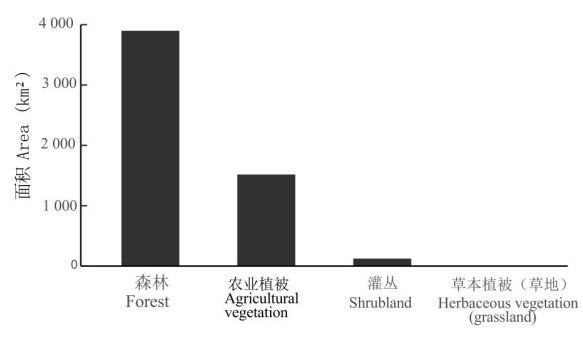
图
1
漓江流域不同植被型组的面积组成
Fig.
1
Area composition of different vegetation formation groups in the Lijiang River basin
2.3 主要群系类型分布特征
常绿针叶林群系中,杉木林在漓江流域多为人工林,广泛分布于流域北部、东部和西南部的非喀斯特山地,尤其在北部越城岭和东部的海洋山大面积以纯林连片分布,也有很多地段与毛竹林镶嵌分布(图2)。马尾松林及马尾松针阔混交林在漓江流域广泛分布,马尾松针阔混交林是马尾松林进一步演替的类型,二者常混杂分布在一起。马尾松林及马尾松针阔混交林在流域内海拔1 000 m以下的低山丘陵地区均有分布,在漓江流域中部及南部红壤区分布较多。
表
1
漓江流域植被型面积组成
Table
1
Area composition of different vegetation formations in the Lijiang River basin
针叶与阔叶混交林中,福建柏林在漓江流域见于东北部的千家洞保护区,分布在生境条件恶劣而特殊的区域,如山顶山脊土层浅薄而苔藓枯枝落叶层厚的地段,或山头悬崖峭壁、生境特殊的地段。该类型分布于砂、页岩和花岗岩山地,土壤为山地黄棕壤或山地黄壤,喀斯特山地未见分布。
落叶阔叶林中,枫香树林在全流域零星分布(图2),在碎屑岩和碳酸盐岩区域均有分布,常见于村落周边和低山的平地或坡度较缓的区域。茅栗林在漓江流域主要分布于北部的中山山地,在资源县的银竹老山多见,其分布地的土壤为山地黄壤,湿度条件一般偏旱。
常绿与落叶阔叶混交林两种群系类型之一的青冈常绿与落叶阔叶混交林在喀斯特山地和砂、页岩和花岗岩山地都有分布。在漓江流域,青冈常绿与落叶阔叶混交林见于流域中部和中南部的喀斯特山地区域(图2),但已很少见到连片分布的群落,多在喀斯特山地顶部或村落周边的风水林有残存的片段分布。水青冈林只见于砂岩、页岩和花岗岩的山地上,喀斯特山地无分布。在漓江流域,水青冈林仅在流域北部的猫儿山发现有分布。
表
2
漓江流域植被亚型面积组成
Table
2
Area composition of different vegetation subformations in the Lijiang River basin
常绿阔叶林有3个植被亚型,其中典型常绿阔叶林植被亚型有3个群系类型,米槠林是漓江流域的地带性植被,在流域内广泛分布于北部的越城岭、东部的海洋山及西南部的架桥岭海拔1 400 m以下的山地,其分布的立地条件为发育在砂岩、页岩、花岗岩上的酸性土壤(有红壤和黄壤),在喀斯特区域则无分布。甜槠林是广西境内分布相当广泛、十分重要的天然林类型之一。在漓江流域,甜槠林与米槠林有着大致相同的分布范围,所在地的环境条件以及群落的外貌、结构和伴生种情况均很类似(图2)。但是,甜槠林更适宜山地温凉湿润的气候,海拔700 m以下低山丘陵很少见,主要分布于海拔700~1 300 m的非喀斯特山地。木荷林是广西境内一种重要的天然阔叶林,主要分布于桂北、桂东北及桂东一带山地丘陵,是一种地带性植被。在漓江流域木荷仅有零散分布,流域北部的越城岭和西南部的架桥岭,木荷林主要见于海拔700 m以下的丘陵山地。
表
3
漓江流域植被主要群系(组)面积组成
Table
3
Area composition of different vegetation alliances (groups) in the Lijiang River basin
常绿阔叶林的山地常绿阔叶林亚型有1个群系类型,即硬壳柯林。以硬壳柯为优势的林分较少见,在漓江流域,硬壳柯林分布在砂岩、页岩和花岗岩山地上,喀斯特山地未见分布,在流域东部和北部海拔800 m以上的山地有分布(图2)。常绿阔叶林的季风常绿阔叶林亚型有3个群系类型,其中桉树林(人工林)在漓江全流域均有零散分布,一般在非喀斯特区域分布较多,喀斯特山地土层稍厚的区域也有种植,以漓江中下游的阳朔及架桥岭一带分布较多(图2)。黧蒴锥林在漓江流域分布很少,在漓江流域东部的海洋山及上游越城岭有分布且仅在红壤或赤红壤的立地条件中分布,在喀斯特区域则无分布。罗浮锥林在广西境内都有分布,但不如米槠林、甜槠林、栲林普遍,多是零星小片出现。在漓江流域,罗浮锥林仅见于北部越城岭和东部海洋山海拔1 300 m以下的非喀斯特丘陵山地。
竹林植被型有1个群系类型,即毛竹林,毛竹林一般位于土壤深厚且排水良好的生境中,在漓江流域毛竹林流域北部的越城岭、东部的海洋山及西南部的架桥岭具有大面积分布(图2)。竹丛植被型也仅有1个群系类型,即箭竹竹丛,其在流域分布的范围较窄,仅在流域最北部海拔1 300 m以上的非喀斯特山地有分布。
落叶阔叶灌丛有4个群系类型,其中红背山麻杆+灰毛浆果楝灌丛在漓江流域分布较少,仅见于喀斯特山地,在漓江流域下游有少量分布。黄荆+檵木灌丛是漓江流域分布最广泛的灌丛类型,在漓江流域中下游的喀斯特山地可见到连片分布。小果蔷薇+雀梅藤灌丛目前仅见于流域内喀斯特丘陵山地,尤其在流域中部和中南部低海拔的喀斯特区域大面积连片分布。杜鹃为我国中南及西南典型的酸性土指示植物,因此杜鹃灌丛在漓江流域仅见于非喀斯特山地,在东部的海洋山、摩天岭及西南部的架桥岭有连片分布(图2)。灌草丛有两种群系类型,其中五节芒是最常见的高草草丛,在漓江流域的喀斯特山地区和红壤区均可分布,从海拔较低的丘陵到中山山地都有分布。五节芒草丛适宜于温暖的气候和湿润深厚的土壤,在流域内海拔500 m以上的红壤山地常见。芒喜气候温凉且土壤湿润的区域,其耐旱性比五节芒强,流域内芒草丛分布较为广泛,但在红壤土丘陵山地更为常见(图2)。
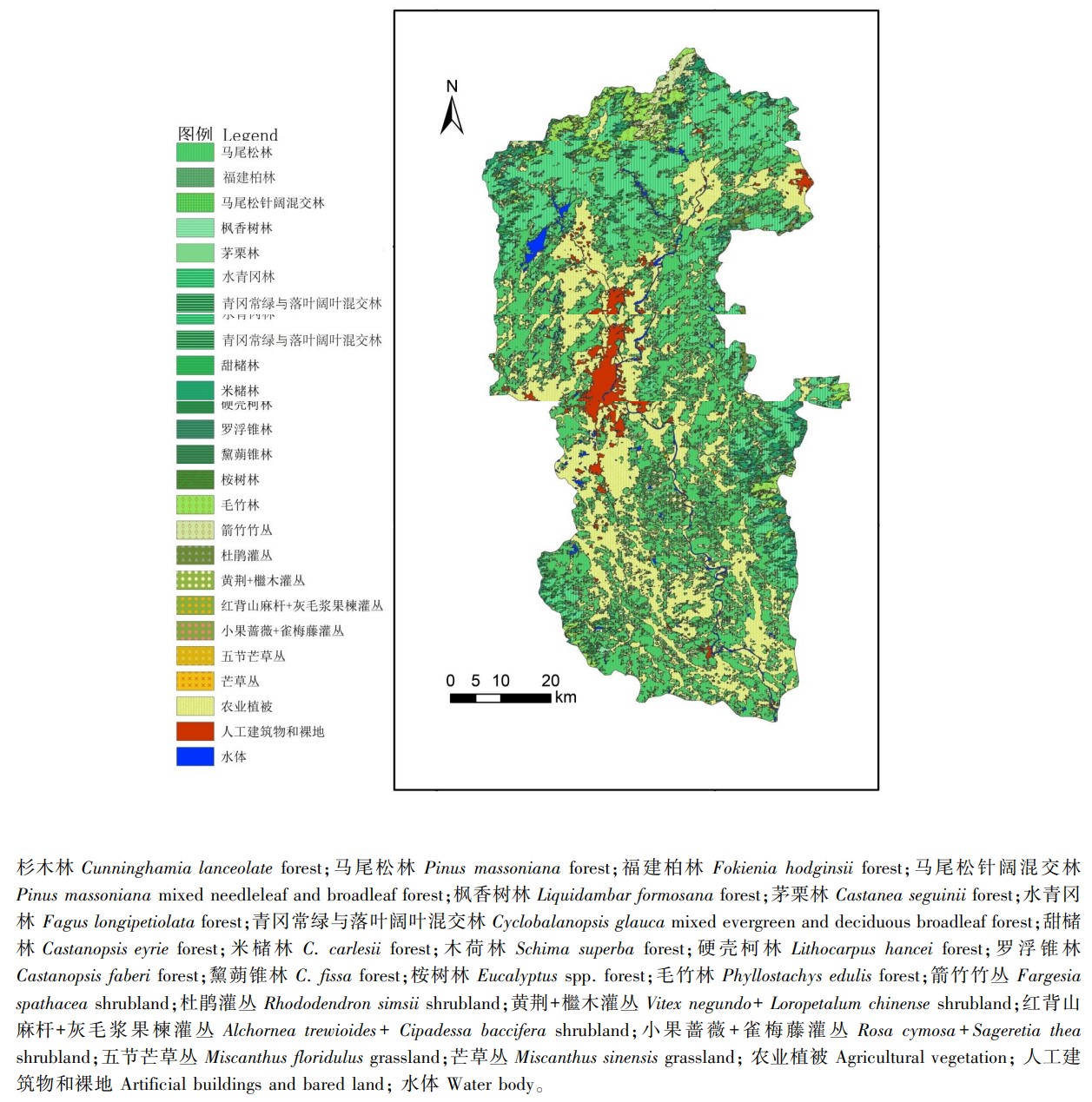
图
2
漓江流域不同植被类型分布示意图
Fig.
2
Distribution diagram of different vegetation types in the Lijiang River basin
3 讨论与结论
3.1 漓江流域主要群系类型的组成特点
漓江流域共识别到23个主要群系(组)类型,既有偏热带的季风常绿阔叶林类型(如黧蒴锥林),也有亚热带典型的常绿阔叶林类型(如米槠林),且温性类型(如杜鹃灌丛)与暖性类型(如马尾松林和杉木林)并存,亚热带山地常绿阔叶林、喀斯特常绿与落叶阔叶混交林交错分布,显示漓江流域群系类型存在较高的多样性和复杂性。另外,茅栗林、硬壳柯林、水青冈林等群系虽然分布极为零星,但这些类型在广西具有分布范围局限、原生性保存相对较好等特点,是区域植被组成中较为独特的类型(苏宗明等,2014)。
3.2 漓江流域不同植被类型的面积组成
从植被型组的面积组成看,森林占流域面积超过66%,但从进一步的群系面积组成来看,真正的原生地带性常绿阔叶林(以米槠林、甜槠林为代表的典型常绿阔叶林群系)合计仅约277 km2,占流域总面积不足5%。与之形成鲜明对比的是,马尾松林、马尾松针阔混交林、杉木林和毛竹林合计占流域面积超过61%,再加上农业植被占流域面积约26%,整体上人工干预的植被类型超过了87%。这一结果与其他研究结果基本一致(向悟生等,2009;王金叶等,2025)。从植被演替角度看,杉木林是一种典型的“封存型”植被(朱念福等,2025),其林下生境的光照条件严重抑制了常绿阔叶树种的天然更新,导致杉木林向地带性常绿阔叶林的演替进程极为缓慢,甚至长期停滞。马尾松林和马尾松针阔混交林等长期以来一直是漓江流域红壤区的主要植被类型(李先琨等,2007),面积占比仍然较高,表明这些群系类型自然演替进入常绿阔叶林阶段的比例非常低,说明与杉木林类似,马尾松林通过自然演替途径成为地带性常绿阔叶林的过程极慢。桉树林在新一代中国植被图(1∶50万)研制的图例系统中,将其列为季风常绿阔叶林,但受市场和政策因素等影响,该类型面积可能存在波动。
3.3 不同群系类型的地理分布特征
本研究结果显示,漓江流域植被群系类型存在较明显的空间分异规律。第一,地带性植被和非地带性植被交错分布。米槠林、甜槠林等地带性群系严格分布于非喀斯特区域(越城岭、海洋山、架桥岭),而在喀斯特区域则完全缺失;在喀斯特区域主要分布的是非地带性的群系类型,如青冈常绿落叶与阔叶混交林和黄荆+檵木灌丛等。第二,植被分布存在明显的海拔梯度特征。漓江流域属中亚热带,流域内的猫儿山等中山山地,植被从山脚向上依次出现典型常绿阔叶林带→常绿与落叶阔叶混交林和针阔叶混交林(苏宗明等,2014)。从研究结果看,漓江流域的猫儿山区域既有海拔1 300 m以下山地典型常绿阔叶林带的主要类型如米槠林、木荷林、甜槠林等,也有海拔1 300 m以上山地分布的常绿与落叶阔叶混交林和针阔叶混交林带类型,如水青冈与常绿阔叶树形成的混交林,说明漓江流域的群系类型存在明显海拔梯度分异特征。第三,从水平分布看,漓江流域植被呈现四周山地森林多、中部灌丛及农业植被多的特征。流域四周的越城岭、摩天岭、海洋山、架桥岭等碎屑岩山地覆盖大面积的杉木林、马尾松林、米槠林等森林,而中部地势相对平缓的区域多为黄荆+檵木灌丛、柑橘园、百香果园、水稻等灌丛及农业植被类型。
3.4 漓江流域植被生态系统保护和修复建议
基于上述结果和分析,本研究提出以下建议:第一,建立常绿阔叶林“种源保护区”。米槠林、甜槠林等原生地带性植被虽面积不大,但现存的植被类型是流域生态保护过程中植被自然恢复不可替代的种源和良好参照系。建议在越城岭、海洋山和架桥岭划定常绿阔叶林种源核心保护区域,严格限制人为干扰,并在周边退化林地中开展以乡土树种补植的植被近自然恢复工程。第二,实施喀斯特植被分级保护修复策略。对残存的青冈常绿与落叶阔叶混交林片段实行严格就地保护;对黄荆+檵木灌丛等次生退化植被开展近自然修复试点。第三,适度改造杉木林和马尾松林等纯林。采取间伐后补植米槠、甜槠、木荷等乡土阔叶树种的措施,逐步引导其向针阔混交林甚至常绿阔叶林方向演替,提升生态系统功能。第四,加快推进桉树林的生态改造修复,特别是喀斯特丘陵山地的桉树林。建议采取“渐进式替代+乡土化混交”策略,对处于重要水源涵养区或喀斯特脆弱山地的桉树林,分批次进行择伐或块状替代,改种高值乡土树种,形成混交林,恢复土壤与水文功能。另外,漓江流域是广西重要的农业生产区,粮食作物和果园等农业植被占比超过1/4,并且农业用地的生态系统服务价值呈下降趋势(何毅等,2021),需因地制宜发展复合型生态农业模式,建立高效集约化的低碳农业产业体系,提高资源生产力和生态系统稳定性。
3.5 小结与展望
基于众源采集数据与多源遥感融合技术,首次识别漓江流域高精度的植被空间分布特征,初步掌握主要群系的面积组成与分布格局。与已有调查研究相比,本研究在植被分类的精细程度和空间分辨率均有明显提升。从研究结果来看,漓江流域主要植被群系组成复杂。从面积组成上看,存在原生地带性植被残存稀少及人工干预类型占主导的特点。从地理分布范围变化来看,漓江流域不同群系类型存在明显的空间分异,呈现地带性和非地带性植被交错分布且具有较明显的垂直带谱变化等特征。
需要特别指出的是,针对中国南方的植被制图,群系级别的分类仍然面临巨大挑战。第一,众源采集数据可能存在空间偏差(Cheng et al., 2023)。由于数据贡献者主要沿交通线采集,北部越城岭、南部架桥岭、东部海洋山及部分偏远喀斯特区域的地面样点密度较低,因此可能导致这些区域小面积群系的漏判或误判。例如,以往该区域存在的一些类型如铁杉(Tsuga chinensis)林、摆竹(Indosasa acutiligulata)林等较多群系(段文军等,2015),本研究未能识别到这些类型。第二,中国南方很多森林在遥感影像上的光谱特征高度相似,单纯依靠遥感光谱难以准确区分(郭庆华等,2021),尽管有地面样点的约束,但部分斑块的分类和面积仍存在不确定性。例如箭竹竹丛,其面积和类型可能存在误判。第三,群系的面积统计是基于基期遥感影像(2020年)的瞬时信息,但植被演替使得群系成为动态变化的实体,尤其是一些人工干预管理快速转换的植被类型(如桉树林)及植被演替较快的类型(如五节芒草丛),这些群系类型可能存在快速的转换,使得面积统计存在不确定性。此外,由于现有技术方法的局限性,因此本研究基于1∶50万植被图的要求进行野外样点采集及植被群系识别,仅识别到23个群系(组)类型。然而事实上,漓江流域分布的植被群系类型远远多于这一数量。因此,未来仍需采集更多的植被地面分布数据,并辅以植被物候变化、激光雷达等数据信息,来实现漓江流域乃至中国南方植被制图的群系分类及空间分布信息的高精度提取。