


Page 114 - 《广西植物》2025年第3期
P. 114
4 9 4                                  广  西  植  物                                         45 卷


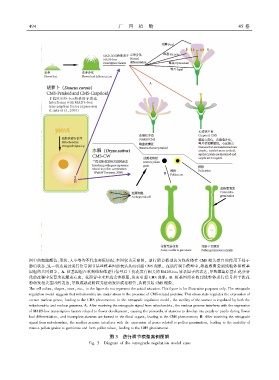
             图中的细胞颜色、形状、大小等均不代表实际情况ꎬ本图仅为示意图ꎮ 逆行调节模型认为线粒体在 CMS 相关蛋白的作用下处于
             胁迫状态ꎬ这一状态通过逆行信号调节某些核基因的表达从而引起 CMS 现象ꎮ 在逆行调节模型中ꎬ雄蕊败育受到线粒体和核基
             因组的共同调节ꎮ A. 核基因组在收到线粒体逆行信号后干扰花发育相关的 MADS ̄box 转录因子的表达ꎬ导致雄蕊原基在花芽分
             化的过程中发育为花瓣或心皮ꎬ 花器官中未形成完整雄蕊ꎬ从而引起 CMS 现象ꎻ B. 核基因组在收到线粒体逆行信号后干扰花
             粉萌发相关基因的表达ꎬ导致成熟花粉粒无法萌发形成花粉管ꎬ从而引起 CMS 现象ꎮ
             The cell colorsꎬ shapesꎬ sizesꎬ etc.ꎬ in the figure do not represent the actual situation. This figure is for illustrative purposes only. The retrograde
             regulation model suggests that mitochondria are under stress in the presence of CMS ̄related proteins. This stress state regulates the expression of
             certain nuclear genesꎬ leading to the CMS phenomenon. In the retrograde regulation modelꎬ the sterility of the stamen is regulated by both the
             mitochondria and nuclear genomes. A. After receiving the retrograde signal from mitochondriaꎬ the nuclear genome interferes with the expression
             of MADS ̄box transcription factors related to flower developmentꎬ causing the primordia of stamens to develop into petals or pistils during flower
             bud differentiationꎬ and incomplete stamens are formed in the floral organsꎬ leading to the CMS phenomenonꎻ B. After receiving the retrograde
             signal from mitochondriaꎬ the nuclear genome interferes with the expression of genes related to pollen germinationꎬ leading to the inability of
             mature pollen grains to germinate and form pollen tubesꎬ leading to the CMS phenomenon.
                                                图 3  逆行调节模型案例图解
                                       Fig. 3  Diagram of the retrograde regulation model case

