


Page 34 - 《广西植物》2025年第3期
P. 34
4 1 4                                  广  西  植  物                                         45 卷
                 Abstract: Litter is a crucial functional component in forest ecosystems. Its decomposition is not only a major pathway for
                 material cycling and energy flow but also a key link in biogeochemical cycles. It profoundly impacts soil fertilityꎬ carbon
                 storage and releaseꎬ biodiversityꎬ and other aspectsꎬ which plays a significant role in maintaining ecological
                 balance. This paper systematically summarizes the main factors influencing litter decompositionꎬ including quality
                 features like chemical compositions and physical structuresꎬ etc.ꎬ of litterꎬ changes in climate conditionsꎬ and the types
                 and activities of soil decomposersꎬ etc. Meanwhileꎬ the paper thoroughly reviews recent research progress and hot topics
                 in the field of litter decomposition both domestically and internationally. This has important theoretical and practical
                 significance for enhancing forest ecosystem managementꎬ advancing material cycling researchꎬ and addressing global
                 climate change. Future research should deepen understandings of topics such as home ̄field advantageꎬ soil fauna rolesꎬ
                 and photodegradation in various forest ecosystem contextsꎬ and establish a systematic framework for studying
                 decomposition mechanisms. Additionallyꎬ developing a long ̄termꎬ fixed experimental network platform for different litter
                 treatments (including addition and removal) against the backdrop of global climate change is crucial for revealing the
                 mechanisms of litter decomposition on soil organic carbon transformation and stability. In the context of global climate
                 changeꎬ this paper offers ecological insights and suggestions for further exploring the influencing factors and response
                 mechanisms of litter decomposition processes.
                 Key words: forest ecosystemꎬ litter decompositionꎬ litter qualityꎬ climateꎬ soil decomposer


                凋落物是指生态系统中植物在生长过程中自
            然脱落的部分ꎬ包括落叶、落枝以及植物的繁殖器
            官等ꎬ这些物质最终归于土壤ꎬ成为土壤有机质的
            主要来源ꎮ 凋落物分解是生态系统物质和能量循
            环的重要过程ꎬ对于植物生长、维持植被生产力、
            缓解气候变暖趋势以及调节生态系统碳、氮平衡
            具有重要意义 ( Bonanꎬ 2008)ꎮ 作为土壤有机碳
            的主要来源ꎬ凋落物分解在维持土壤生态系统结
            构、碳源与碳 汇 功 能 方 面 具 有 关 键 作 用 ( Sun et
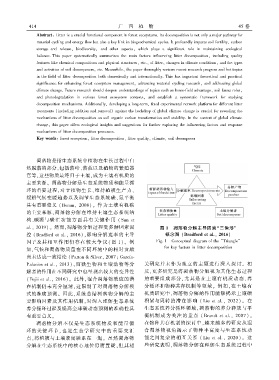
            al.ꎬ 2019)ꎮ 然而ꎬ凋落物分解过程受多种因素调                             图 1  凋落物分解主导因素“三角形”
            控 (Bradford et al.ꎬ 2016)ꎬ影响分解速率的主导                         概念图 (Bradford et al.ꎬ 2016)
            因子及其相互作用仍存在较 大 争 议 ( 图 1)ꎮ 例                            Fig. 1  Conceptual diagram of the “Triangle”
            如ꎬ气候和凋落物质量在不同环境中的相对贡献                                      for key factors in litter decomposition
            尚未达成一致结论 (Parton & Silverꎬ 2007ꎻ García ̄
            Palacios et al.ꎬ 2013)ꎬ而微生物和土壤动物等分                 关研究并未作为独立的主题进行深入探讨ꎮ 相
            解者的作用在不同研究中也呈现出较大的变异性                              反ꎬ更多研究是将凋落物分解视为其他生态过程
            (Fujii et al.ꎬ 2016)ꎮ 此外ꎬ混合凋落物效应的潜                 的重要组成部分ꎬ尤其是在土壤有机质动态、养
            在机制仍未充分厘清ꎬ这限制了对凋落物分解模                              分循环和物种共存机制等领域ꎮ 例如ꎬ在土壤有
            式的准确预测ꎮ 因此ꎬ系统总结凋落物分解的主                             机质研究中ꎬ凋落物分解的作用能够揭示土壤碳
            要影响因素及其作用机制ꎬ对深入理解生态系统                              积累与周转的潜在影响 ( Liu et al.ꎬ 2022) ꎮ 在
            养分循环过程及提高全球碳动态预测的准确性具                              生态系统养分循环领域ꎬ凋落物的养分释放与平

            有重要意义ꎮ                                             衡机制成为关注的重点 ( Brandt et al.ꎬ 2007) ꎮ
                 凋落物分解不仅是生态系统物 质 和 能 量 循                       在物种共存机制的探讨中ꎬ越来越多的研究从混
            环的关 键 环 节ꎬ 也 是 生 态 学 研 究 中 的 重 要 交 汇               合凋落物视角揭示了物种丰富度与生态系统功
            点ꎬ将植被与土壤紧密联系在一起ꎮ 虽然凋落物                             能之间复杂的相互关系 ( Liu et al.ꎬ 2020) ꎮ 这
            分解在生态系统中的核心地位毋庸置疑ꎬ但其相                              些研究表明ꎬ凋落物分解在理解生态系统过程中

